Building AI-Native Teams
How AI-native collaboration is changing how teams build.

Hey, I’m Julie, Founder of RETHINK. I help founders and product leaders build brand authority through intentional community events, and curated dinners by embedding their team inside the conversations that matter. » Let’s partner «
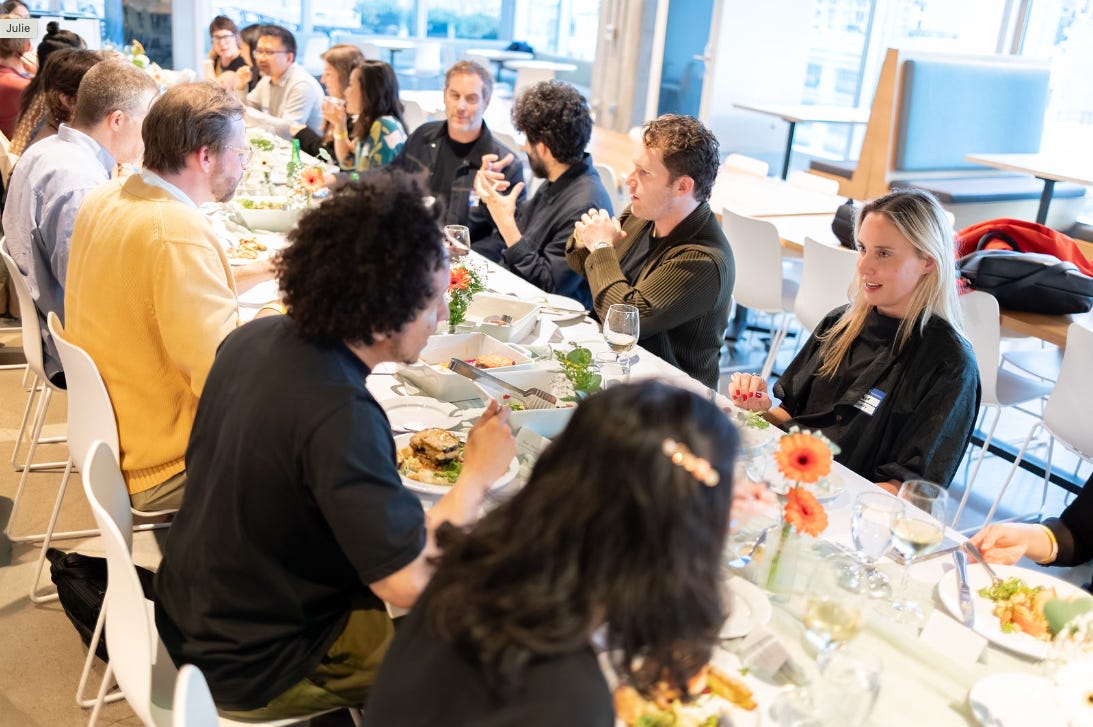
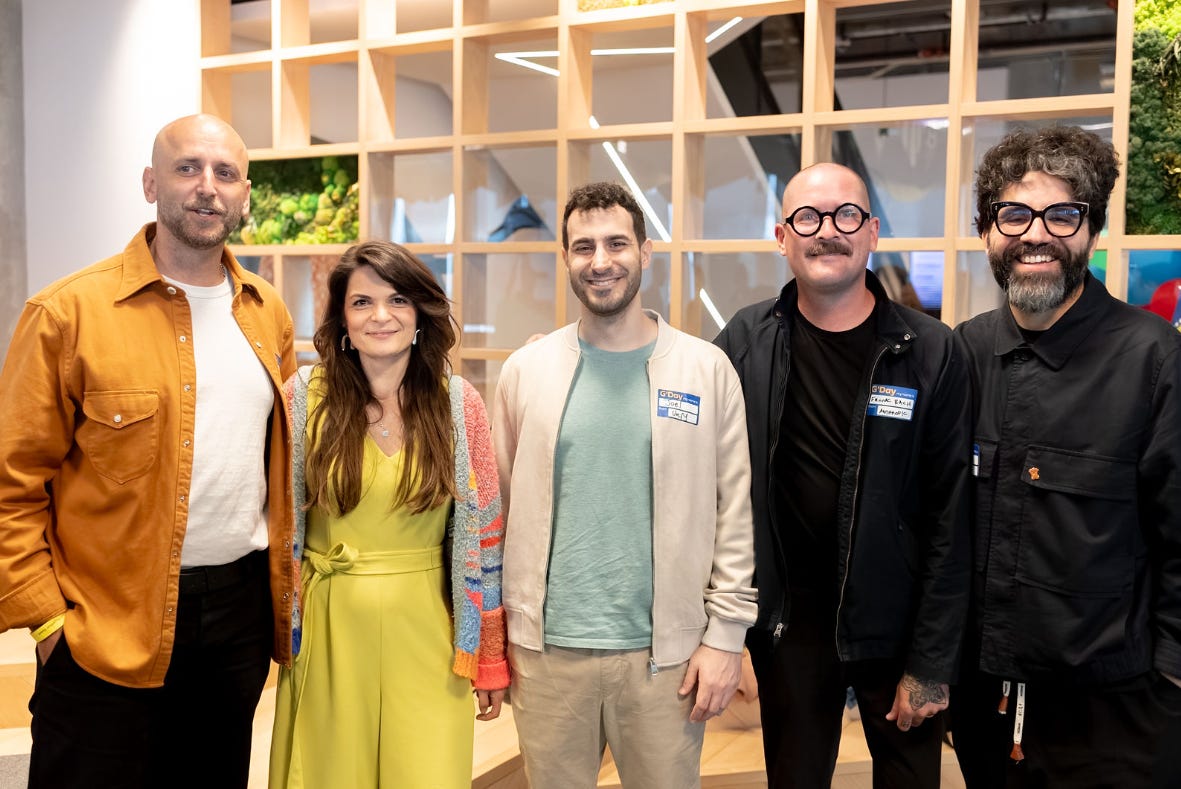
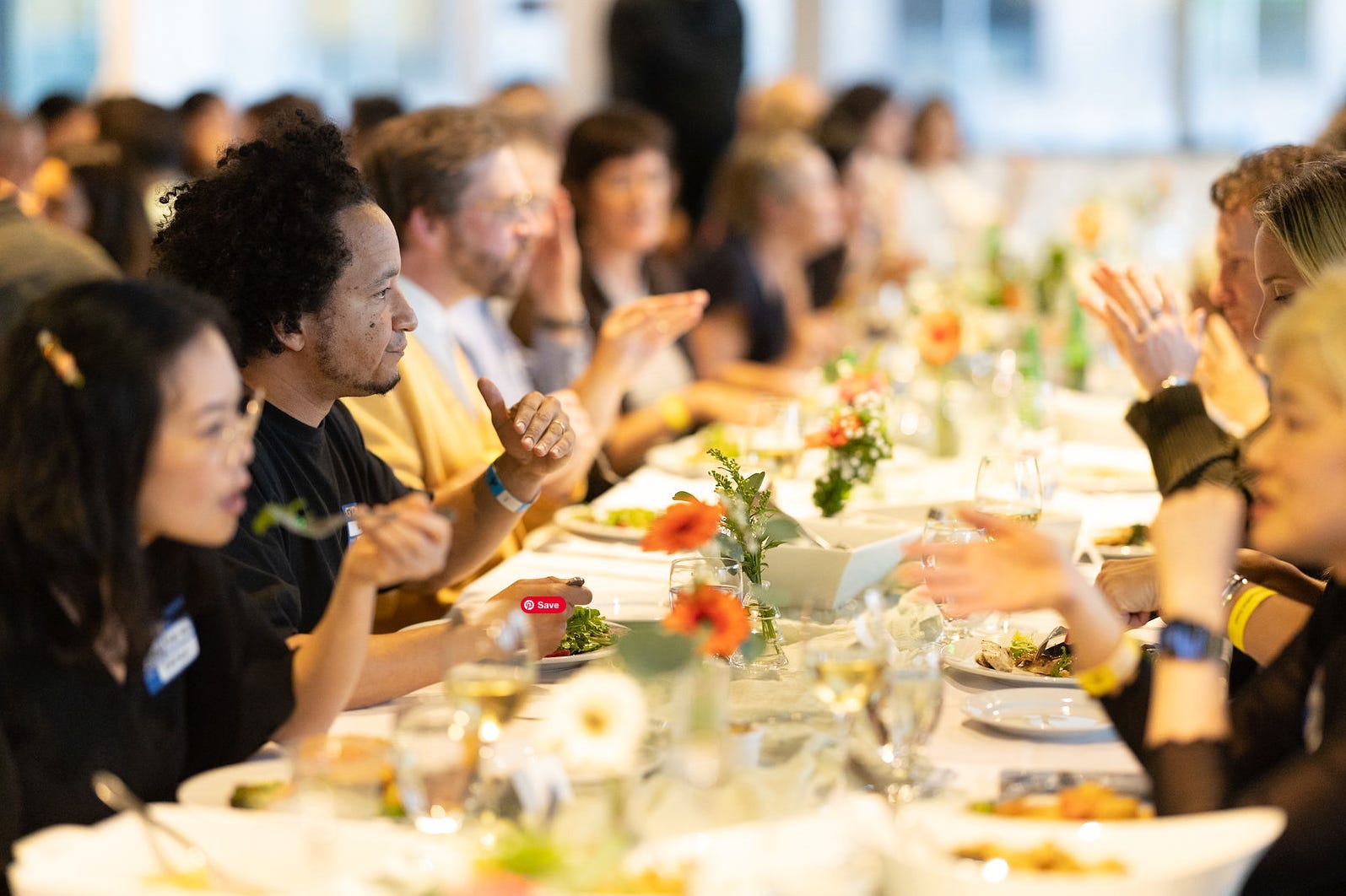
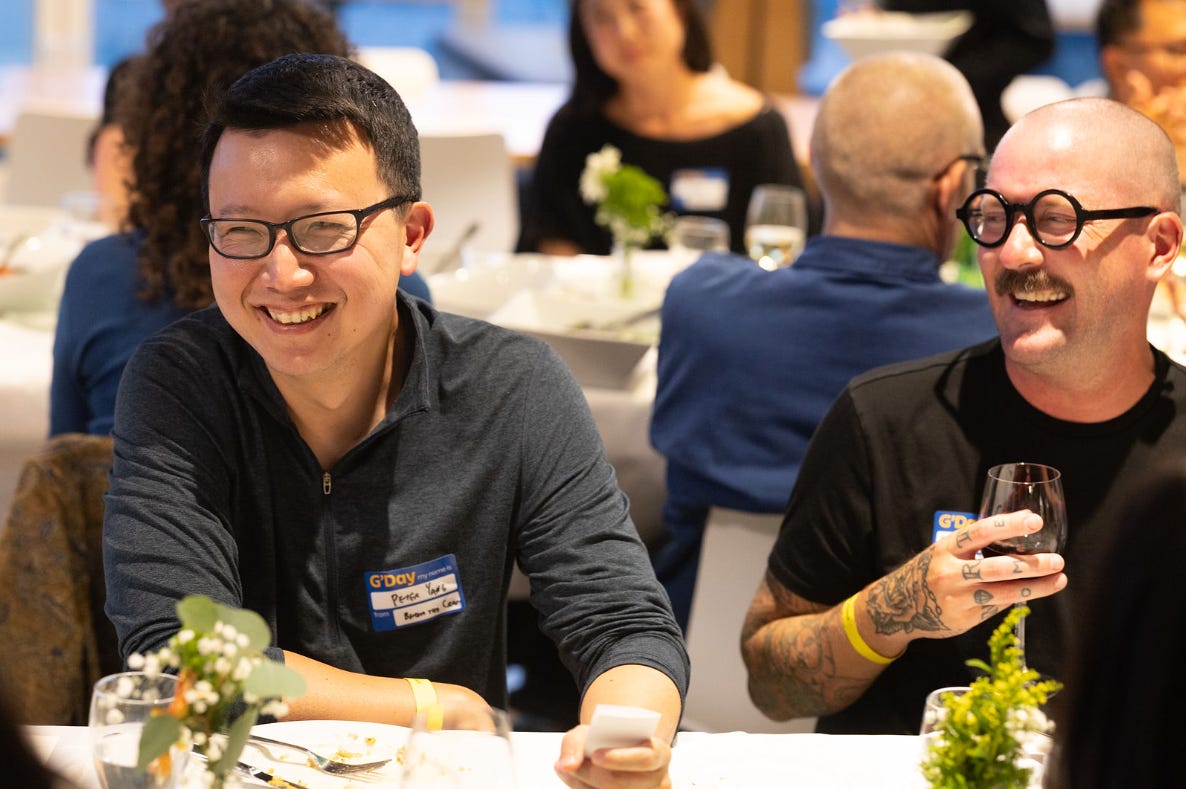
A few weeks ago, we hosted a dinner in San Francisco with an incredible group of AI product and design leaders.
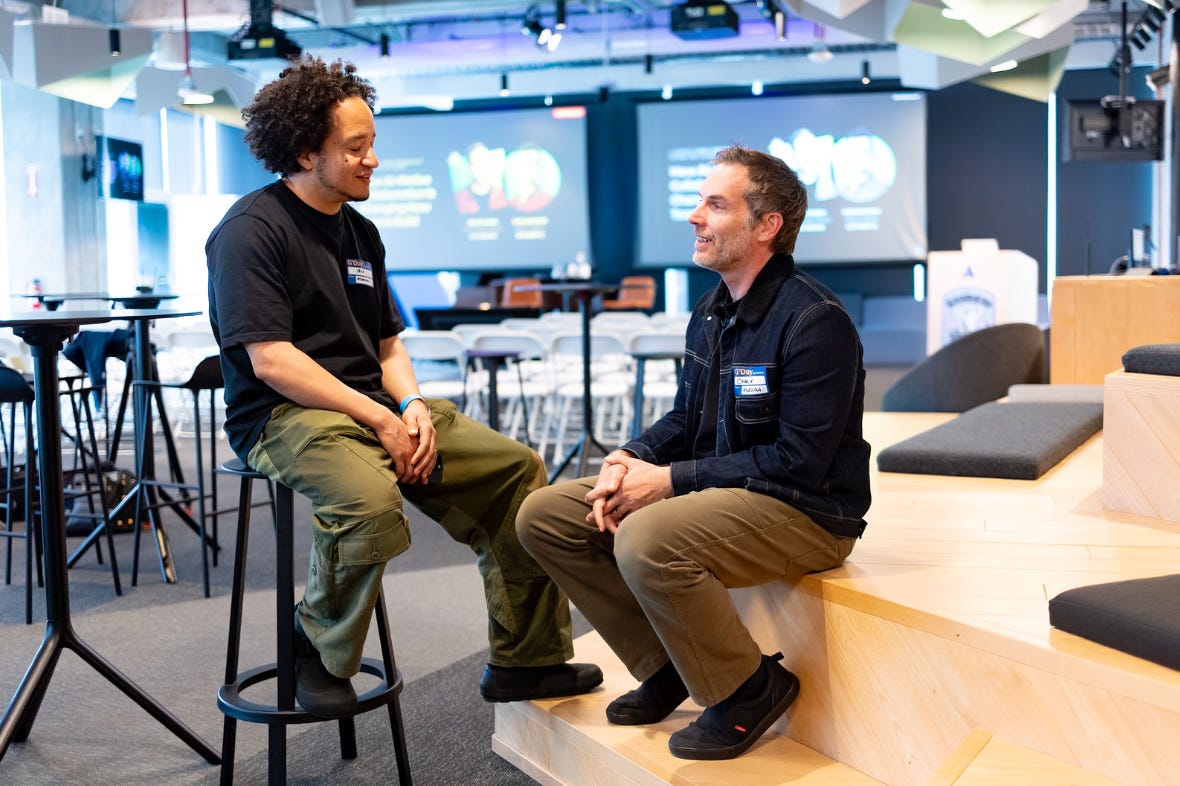
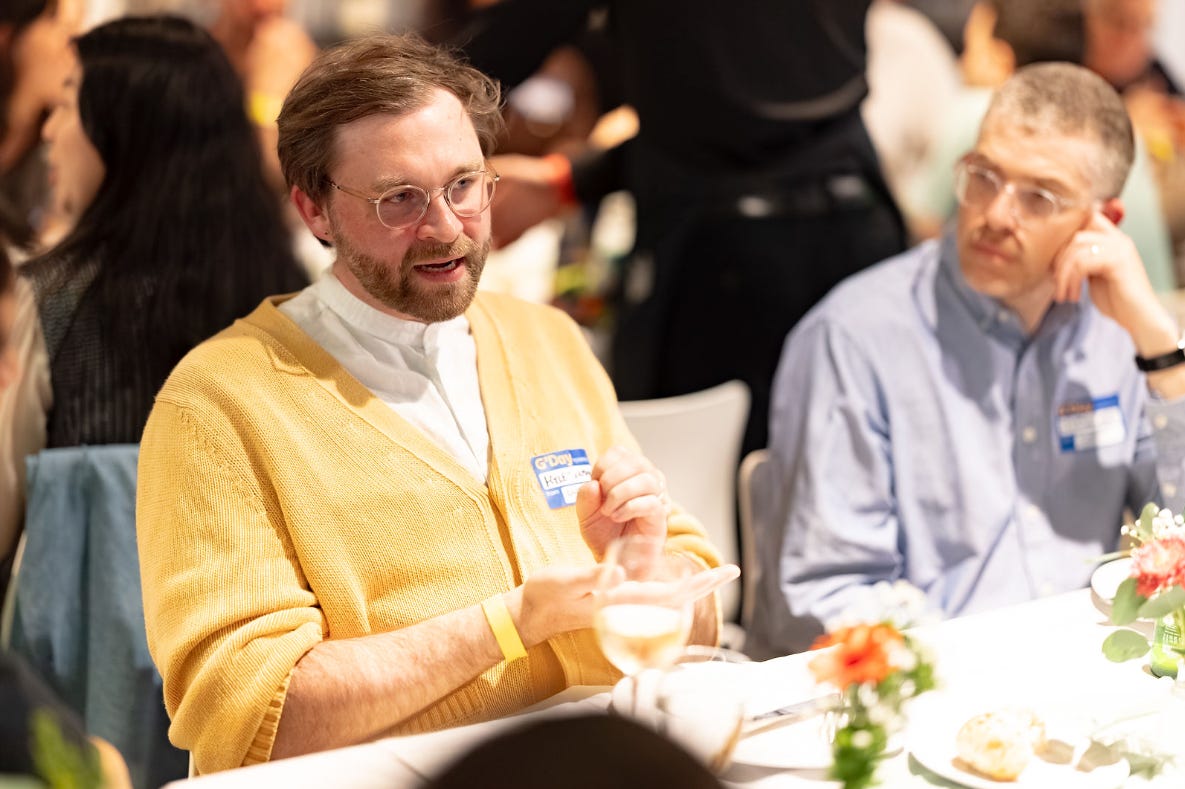
Joel Lewenstein (Head of Design at Anthropic) and Charlie Sutton (Chief Design Officer at Atlassian) joined 40 leaders from Anthropic, Atlassian, Apple, Meta, OpenAI, Shopify, Airtable, Everlaw, Vercel, Zendesk, Discord, and more to discuss how AI is reshaping collaboration, and the way teams build products together.
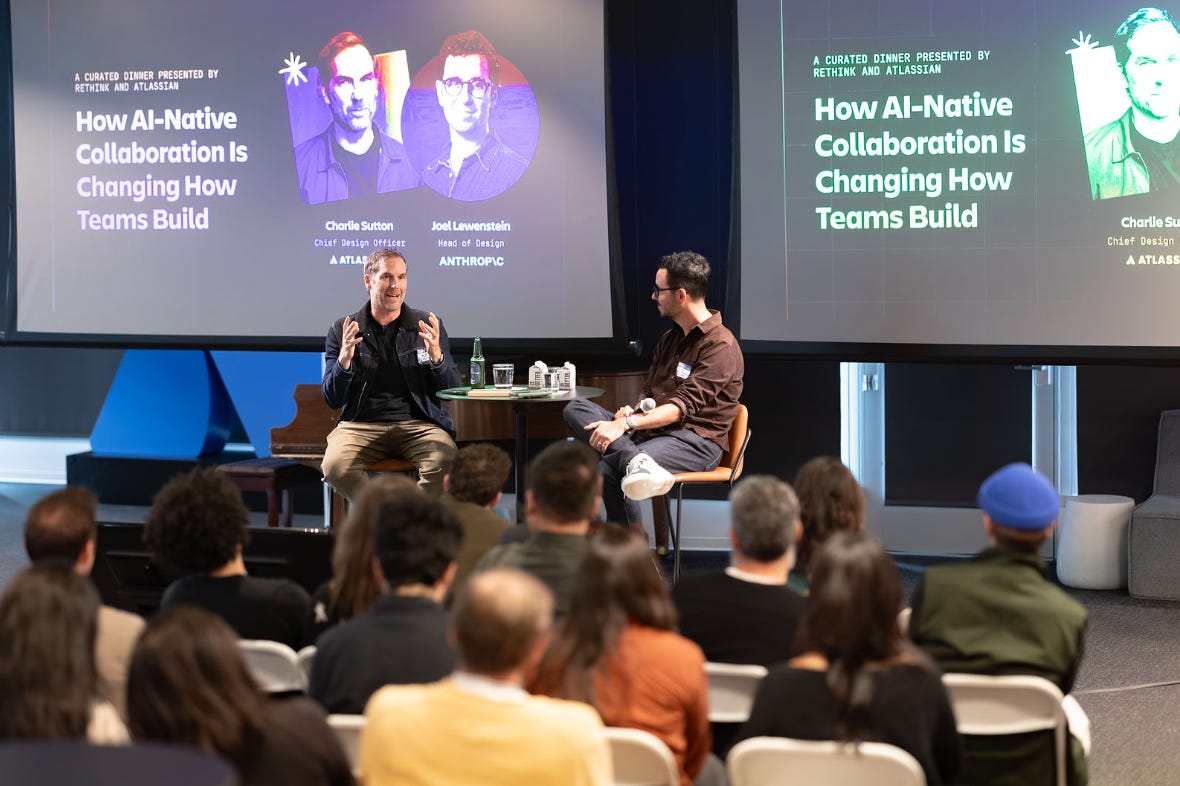
How do we think about balancing mature products and customers who rely on stability with teams who are constantly experimenting and building the tools of the future? What happens when those worlds collide?
A few highlights from the evening:
The next challenge is building coherence.
Human judgment becomes more valuable as creation becomes easier.
Quality is more than polish, it’s an expression of care.
Joel & Charlie kept coming back to coherence as the hard problem to solve these days.
Is it getting harder to enforce coherence as AI enables engineers to ship directly to production?
As AI dramatically lowers the cost of creating products and prototypes, the conversation shifted from execution to coherence. AI makes it much easier for one person to build, prototype, and move fast, but that can make shared understanding across teams much harder.
Design systems alone won't solve this next generation of complexity.
Design leaders will increasingly need to create coherence through product architecture, communication, and shared ways of thinking, not just through reusable UI components.
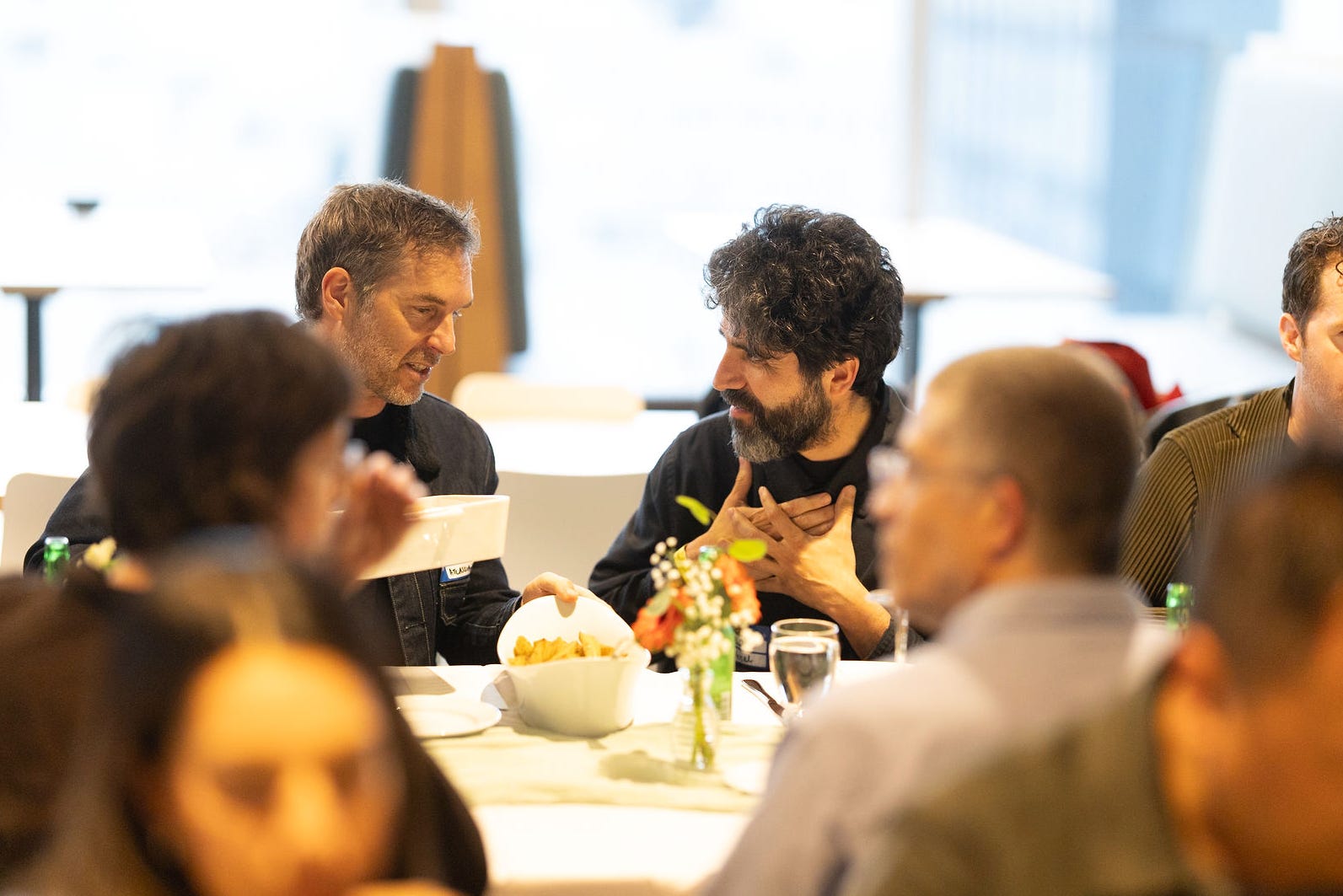
Are engineers becoming better designers?
Joel shared that the average engineer is producing higher-quality work than before because AI tools have better taste and generate better defaults. That doesn’t mean that that their eye or taste or judgment is getting better. The tooling is doing it for them.
Charlie then built on that by saying that one positive outcome is that designers and engineers now share more of the same language because they’re both working directly in code and reviewing changes together.
Charlie’s core argument was that the way to balance innovation and stability is to stop evaluating features from the perspective of an individual and instead evaluate them from the perspective of a team. Can you rotate every product question from “How does this work for one person?” to “How does this work for a group of people?”
AI is raising the baseline quality of what engineers can produce. Great design still depends on human judgment, taste, and the ability to express clear product intent.
Design engineers become increasingly valuable.
The role shifts from building prototypes to:
expressing ideas clearly
improving tooling
helping others prototype better


If AI makes building effortless, how do we become better at deciding what deserves to be built?
As execution is getting cheaper, point of view is becoming more valuable. If anyone can make a prototype, the differentiator is having a clear opinion about what should be built and why.
Human judgment becomes more valuable as creation becomes easier.
Rather than optimizing for technical execution, Charlie and Joel shared that organizations are increasingly looking for people with strong product judgment, clear points of view, and the ability to articulate why an idea matters.
How do you find your point of view inside the company? At what stage of the process does it emerge?
What becomes the role of designers and product leaders when execution is no longer the bottleneck?
How do organizations cultivate judgment, taste, and clear points of view in an era of AI-generated abundance?
In a world where anyone can generate solutions, the competitive advantage shifts toward framing the right problems.


One of the most thought-provoking discussions centered on whether traditional notions of design quality still matters in the AI era.
How should organizations define and maintain quality when AI enables products to evolve faster than ever?
Joel asked a question I think a lot of us have quietly wondered. “If AI products are creating completely new kinds of value do users really care about perfect micro-interactions anymore?”
Charlie’s answer stayed with me.
Quality is more than polish. It’s an expression of care.
Quality it’s how users perceive respect, reliability, and trust.
Because products become relationships.
Charlie and Joel discussed how review and quality standards are shifting.
Too much review slows shipping. Too little review creates chaos.
Teams may need lighter review for early experiments and stronger review for mature, production-critical products. Different products deserve different review bars. Creating review processes based on product maturity rather than applying one governance model.

How do I go about developing my own taste anymore?
Average quality improves because tooling improves.
Taste does not automatically improve.
How do we cultivate judgment, taste, and clear points of view in an era of AI-generated abundance?
Taste develops from understanding enduring principles, not chasing current trends.
Charlie: Study history. Not just product design.
Joel: Seek critique. Taste develops through repeated feedback. Compare two designs. Ask “Why is one better?” not “Which do you prefer?”


What becomes hard in 2032?
This might have been the most fun question of the night. Fast forward to a world where tokens are cheap... What's hard then? Where do we focus our energy?
Joel imagined a future where AI can take an idea all the way from user research to shipping a product.
If all of that becomes easy...
What’s left?
Charlie’s answer wasn’t technology.
It was people.
Understanding why teams disagree.
Understanding how organizations actually work.
Understanding the invisible relationships inside companies.
Maybe the hardest problems won’t be technical anymore.
They’ll be human.
Looking ahead, the future challenge is less “can AI build it?” and more can people and teams work well together around it?
How can organizations preserve a culture of care while dramatically increasing the pace of shipping?